How to Read a Cayman Islands Lease Before You Sign
7 June 2026 · 4 min read
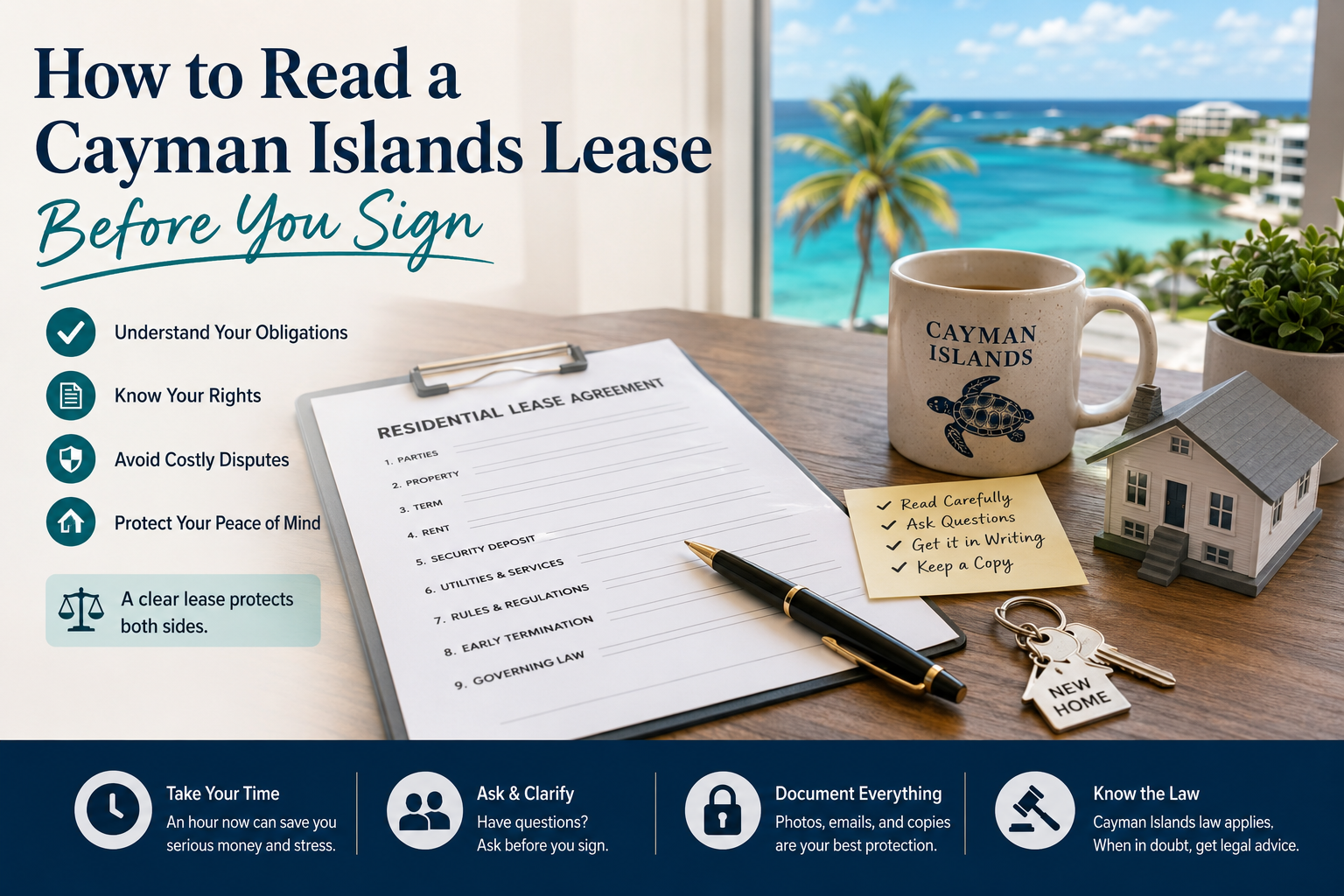
Signing a lease is one of the bigger commitments you will make on island, yet most people spend less time reading it than they do scrolling social media. A lease is a binding contract, and in the Cayman Islands the rental market moves fast — it is tempting to sign quickly so you do not lose the unit. Resist that urge. An hour of careful reading now can save you serious money and stress later.
Start With the Basics
Before you dig into the fine print, confirm the fundamentals are correct:
- Names — every adult occupant should be named, and the landlord's full legal name or company name should appear.
- Property description — the address, unit number, and any included parking spaces or storage should be clearly listed.
- Term — fixed-term (e.g. 12 months) or month-to-month? Know which one you are signing.
- Rent amount — stated in KYD or USD? Confirm the currency and the due date each month.
If any of these details are blank or wrong, ask for a corrected draft before you sign.
Security Deposit Terms
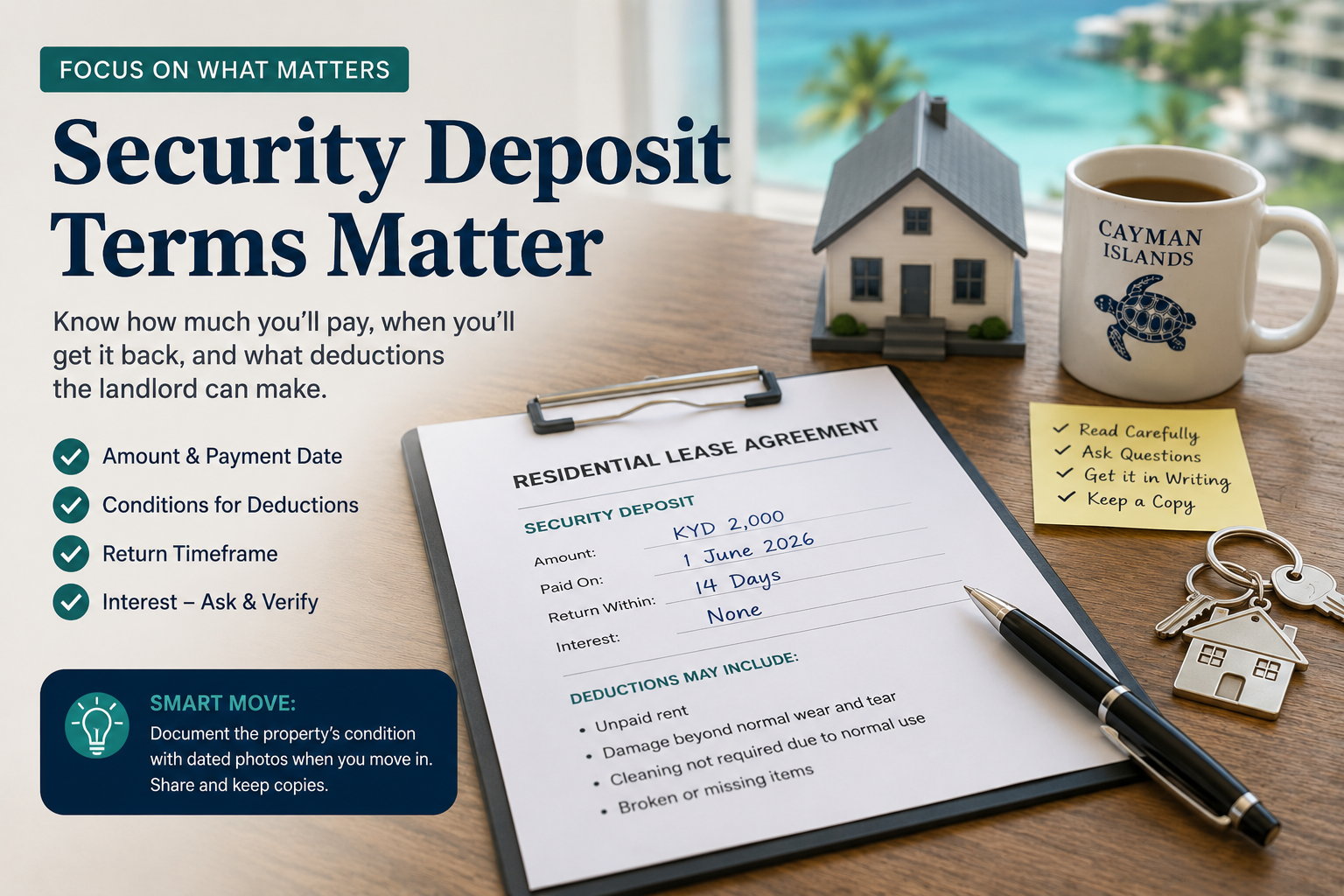
Cayman leases almost always require a security deposit. Look closely at:
- How much is required and when it must be paid
- The conditions under which the landlord can make deductions
- The timeframe in which the deposit must be returned after you vacate
- Whether interest is payable on the deposit (practices vary — verify what is standard)
Document the property's condition thoroughly with dated photos on the day you move in. Share copies with your landlord and keep them yourself.
Rent Increases and Renewals
Check whether the lease spells out how and when the landlord can raise the rent. Look for:
- The required notice period before a rent increase takes effect
- Any cap on how much the rent can increase at renewal
- Whether the lease auto-renews or converts to month-to-month when it expires
If the lease is silent on these points, ask the landlord to clarify in writing before you sign.
Utilities, Maintenance, and Repairs
This section is where many disputes originate. Be clear on:
- Which utilities you pay (CUC electricity, water, internet, waste collection)
- Which the landlord covers, if any
- Who is responsible for routine maintenance versus structural repairs
- The process for reporting a repair — and the expected response time
A well-drafted lease will distinguish between tenant-caused damage and normal wear and tear. If yours does not, ask for that language to be added.
Rules Around the Property
Look for clauses covering:
- Pets — allowed, restricted by size or breed, or prohibited entirely? Is there an additional deposit?
- Subletting — most Cayman leases prohibit subletting without written consent. Renting on short-term platforms without permission is a common source of evictions.
- Alterations — painting, hanging fixtures, or making structural changes may require landlord approval.
- Guests — some leases limit how long a guest may stay before they are considered an occupant.
Early Termination
Life changes. Check what happens if you need to leave before the lease ends:
- Is there a break clause, and if so, what notice is required?
- Will you forfeit the deposit or owe additional rent?
- What are the landlord's obligations to mitigate loss by finding a new tenant?
If there is no break clause, try to negotiate one — especially for a 12-month or longer term.
Jurisdiction and Dispute Resolution
Any disputes about a Cayman Islands lease are governed by Cayman Islands law. If a clause references the law or a specific tribunal, verify that reference is current and accurate with a local attorney or the relevant government authority. Do not assume a clause is enforceable just because it is in writing.
A Few Final Tips
- Never sign a lease you have not read in full, even if you are pressed for time.
- Ask for any verbal promises to be added in writing as an addendum.
- Keep a signed copy of the lease in a safe place for the entire tenancy.
- When in doubt, consult a local attorney — the cost of an hour of legal advice is far less than the cost of a dispute.
A lease protects both sides when it is clear and fair. Take the time to understand yours, and you will start the tenancy on solid ground.