Move-Out Inspections: How to Close a Tenancy Without the Drama
29 June 2026 · 4 min read

The end of a tenancy is where most landlord-tenant disputes actually happen. Rent was paid, the lease ran its course, but now someone disagrees about a scratch on the worktop or a stain on the carpet. A well-run move-out inspection is what keeps that disagreement from turning into a drawn-out argument — or worse, a formal complaint.
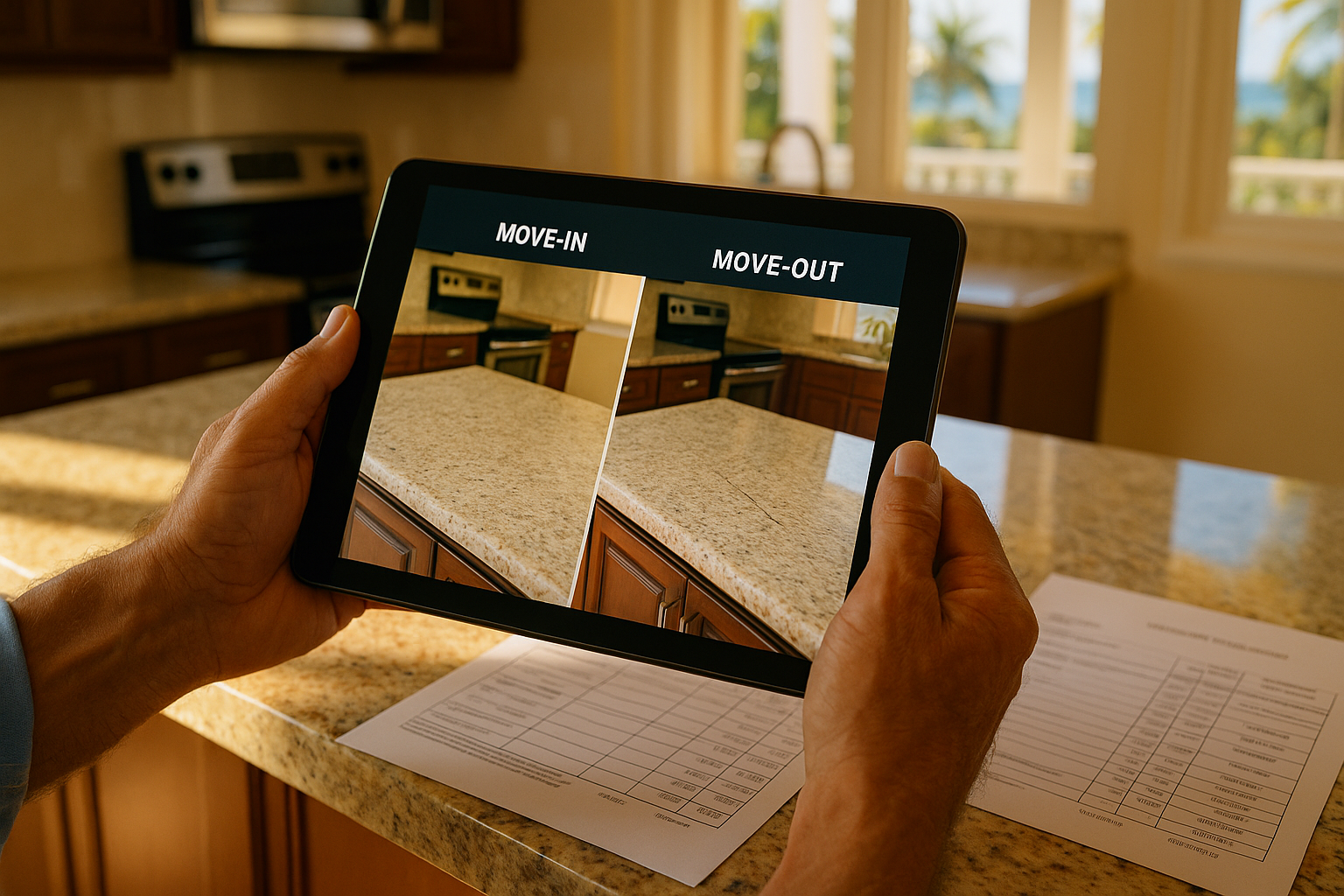
Here's how to do it properly.
Schedule It Before the Keys Come Back
Don't wait until after your tenant has handed over the keys to check the property. Arrange the walk-through for the final day of the tenancy, ideally with the tenant present. This gives everyone a chance to see the same things at the same time, ask questions, and agree on what's being noted.
If the tenant refuses to attend or simply can't make it, carry out the inspection anyway — and document that you gave them reasonable notice and the opportunity to be there.
Bring Your Move-In Report With You
This is the whole point of doing a thorough move-in inspection in the first place. Your move-out walk-through only makes sense when you can compare it directly against the condition recorded at the start of the tenancy.
Go room by room with both reports side by side. What's changed? What was already noted as worn or damaged before the tenant moved in? Fair wear and tear — minor scuffs, small nail holes, fading from sunlight — is normal and generally not something you can charge a tenant for. New damage, broken fittings, or missing items are a different matter.
If you're unsure what falls under "fair wear and tear" locally, it's worth checking with a local property professional or legal adviser rather than making assumptions.
Use Photos and Video, Not Just Notes
Written notes are useful, but photos and video are what actually hold up when there's a dispute. Take timestamped images of:
- Every room, from multiple angles
- Any damage or staining, with a close-up and a wide shot for context
- Appliances, fixtures, and fittings
- Outdoor areas, parking spaces, and storage
- Meter readings if utilities are in your name
A short walkthrough video can also be useful — it's harder to dispute than still photos alone.
Check the Things People Often Forget
It's easy to focus on the obvious — walls, floors, furniture — and miss the details that quietly add up. Make sure you also check:
- Inside cupboards and wardrobes
- Oven, fridge, and other included appliances
- Window tracks, louvre blades, and screens (important in Cayman's climate)
- Air conditioning filters and units
- Outdoor spaces, including any garden areas or balconies
- All keys, remotes, fobs, and access cards accounted for
Document the Handover in Writing
Once the inspection is done, write up a summary of your findings and share it with the tenant promptly — ideally within a day or two. Note anything that was in good order, and be specific about any items of concern.
If you're making deductions from a security deposit, explain exactly what each deduction relates to and, where possible, provide quotes or receipts to support the amount. Vague deductions are the most common reason disputes escalate. Check the current local requirements around how and when deposits must be returned — these rules exist to protect both parties and are worth knowing before you're in the middle of a disagreement.
Keep Everything on File
Retain all inspection reports, photos, correspondence, and deposit documentation for well beyond the end of the tenancy. You may need them months later if a dispute surfaces.
Organised records also make your job easier next time — a clean property history helps you make confident decisions when a new tenant applies.
How CayRentManager Can Help
CayRentManager is built for exactly this kind of detail. You can store move-in and move-out inspection reports alongside photos, track deposit records, and keep all your tenant correspondence in one place — so when a tenancy ends, you're not scrambling through email threads and USB drives looking for evidence. Everything's already there, organised and ready. It's the kind of paper trail that keeps things professional and protects you if questions ever arise.