Understanding Security Deposits in the Cayman Islands Rental Market
11 June 2026 · 3 min read

Security deposits are one of the most common sources of friction between landlords and tenants — not because people are dishonest, but because expectations are rarely set clearly from the start. Get this right and you protect your property, your money, and the relationship.
How Much Should a Security Deposit Be?
In the Cayman Islands, it is common practice for landlords to request one to two months' rent as a security deposit, though the exact amount is a matter of negotiation between both parties. Furnished properties or those with high-end finishes often attract a higher deposit to reflect the greater replacement cost involved.
Whatever amount you agree on, write it into the tenancy agreement clearly — the figure in KYD, the conditions under which it is held, and when it is due.
Keeping the Deposit Safe
One of the most sensible things a landlord can do is hold the security deposit in a separate bank account, distinct from personal or operating funds. This keeps the money clearly identifiable and avoids any confusion at the end of the tenancy.
Neither party should treat the deposit as accessible cash during the tenancy. It exists for one purpose: to cover legitimate costs if something goes wrong.
Document Everything Before Move-In
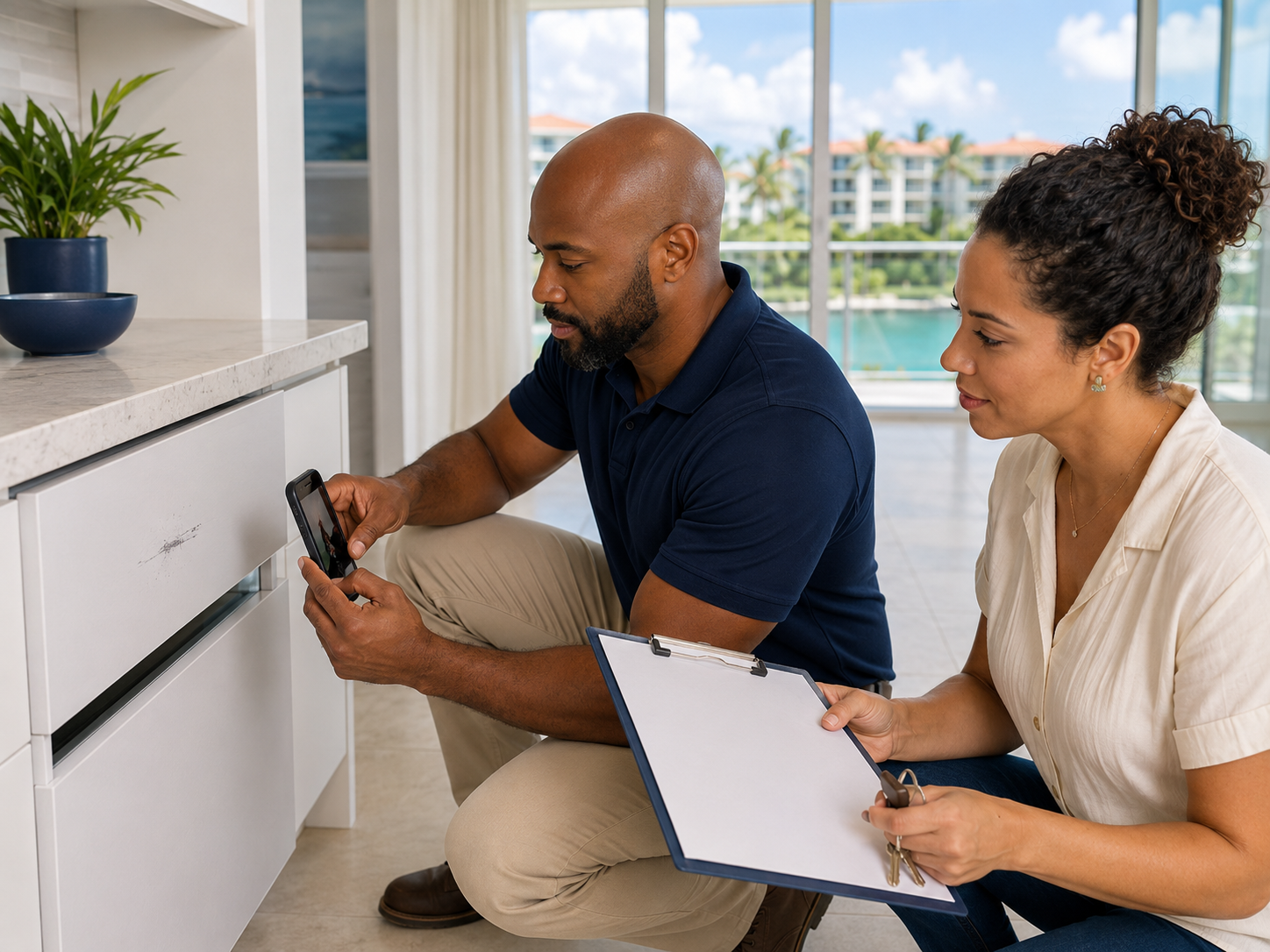
A thorough move-in inspection is the single most valuable step you can take. Walk through the property together and record:
- The condition of every room, fixture, and appliance
- Existing scuffs, stains, or damage (with photos and video)
- Meter readings for utilities where applicable
- Any items provided (keys, remote controls, parking passes)
Both parties should sign and date this report. Store copies somewhere accessible — CayRentManager lets you attach inspection records directly to a tenancy file so nothing gets lost.
What Can a Landlord Legitimately Deduct?
This is where disputes most often arise. A landlord can generally make deductions for:
- Damage beyond fair wear and tear
- Unpaid rent at the end of the tenancy
- Cleaning costs if the property is left in a significantly worse state than it was received
- Replacement of missing items listed in an inventory
What a landlord cannot do is charge for normal wear and tear — the gradual, reasonable deterioration that comes from someone simply living in a home. A small scuff on a wall after two years is normal. A broken door handle is not.
If you are unsure where the line falls for a specific situation, it is worth speaking with a local property professional or seeking legal guidance.
Returning the Deposit on Time
At the end of the tenancy, conduct a move-out inspection as carefully as you did at move-in. Compare the two records side by side. If there are no valid deductions, return the full deposit promptly — good landlords do not hold onto money unnecessarily, and it protects your reputation in a small market like Cayman where word travels fast.
If deductions are warranted, provide the tenant with an itemised written breakdown. Be specific: vague references to "cleaning" or "repairs" without detail invite disputes. Attach quotes or receipts where you have them.
A Note on Local Rules
The rules around security deposits — including any requirements for how they must be held, timelines for return, and dispute resolution — can change, and your specific circumstances may affect how they apply. Always verify current requirements with a qualified local attorney or the relevant Cayman Islands authority before finalising your tenancy agreement.
Keep It Professional from Day One
Security deposits work best when both parties treat them as a formal arrangement, not an afterthought. A well-documented move-in, a clear agreement, and open communication throughout the tenancy mean that the vast majority of deposit returns are straightforward.
Use CayRentManager to store your inspection reports, track deposit amounts, and keep your tenancy documents in one place — so when move-out day comes, you have everything you need to handle it cleanly and fairly.